

In the machines, when two surfaces move in relative motion to each other, it leads to friction and wear. To reduce the damage due to friction and wear, lubricants are used. There are different types of lubricants, such as dry/solid, semi-solid, liquid and gaseous.
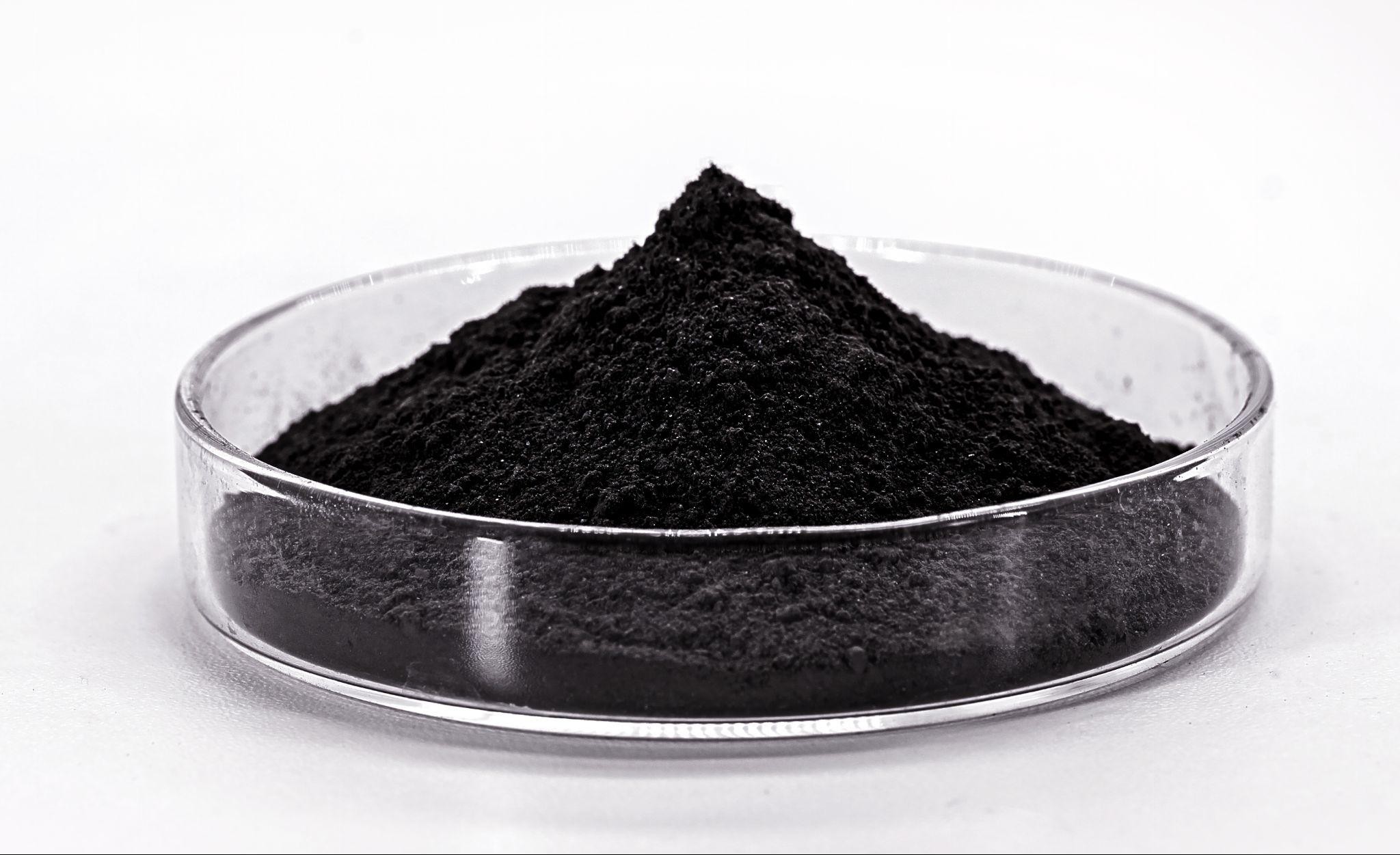
One of the solid lubricants is Molybdenum disulfide (MoS2), and it can be used in dry lubrication conditions. It can be used in solid form or as an additive in liquid lubricants to provide lubrication. It can be used as an individual component of a composite coating. It can provide low and controlled friction between the two moving surfaces.
MoS2 is classified as a Transition Metal Dichalcogenide (TMD) that exhibits lubricating properties due to its layered crystal structure. In a layer, a plane of Molybdenum atoms is sandwiched between two planes of Sulphur atoms. The atoms within the layers are bonded with covalent bonds. The individual layers are held together by weak Van der Waals forces.
When a force is applied, the layers easily slide against each other, resulting in a low coefficient of friction. The layers align themselves parallel to the direction of motion. The layers with strong atomic bonds provide a good load-carrying capacity perpendicular to the direction of motion..
MoS2 is a solid lubricant and is used in applications where liquid lubricants and greases cannot be used. In high-temperature applications, liquid lubricants and greases can decompose and oxidise, in vacuum they can evaporate, at cryogenic temperatures they can become too viscous and solidify, in radiation they can decompose, and in high-load conditions they may exceed the load-carrying capacity. For all these types of applications solid lubricant like MoS2 can be used. It is also available in a convenient aerosol spray as a dry Moly spray.
In the spray, MoS2 is mixed with alcohol and comes out as a liquid. It has to be sprayed on a surface to be lubricated and allowed to dry. The alcohol evaporates, leaving behind a dry and non-sticky protective lubricating film. The film adheres strongly to the surface and helps to reduce friction and wear.
Properties of MoS2
- MoS2 is chemically stable over a wide temperature range. It can provide effective lubrication in air in a temperature range of – 185 °C to 350 °C, in high vacuum/inert gas up to a temperature of 1100 °C. MoS2 begins to oxidise at a temperature above 350 °C and forms Molybdenum Trioxide (MoO3). MoO3 itself is a lubricant at high temperatures, but wears rapidly.
- MoS2 can adhere strongly to the surface to be lubricated and does not damage the surfaces. It does not tend to creep, flow or migrate.
- MoS2 does not contaminate the products or the environment, and therefore, it can be used in the food and textile industries. Liquid lubricants and greases may contaminate the products as they tend to pick up surrounding dirt and dust.
- It has very low volatility and can be used in high-vacuum applications such as space applications.
- It is chemically inert and can be used in reactive chemical environments.
- It is usually stable to radioactivity and can be used in nuclear power plants.
- It has a good load-carrying capacity and can be used in high-load applications. It does not get squeezed out like liquid lubricants and can avoid direct contact between the two surfaces.
- It is non-toxic and economical, and offers sufficient resistance to wear. It does not react with the surfaces and provides a useful life.
- It is stable to most chemicals but gets attacked by strong oxidising acids and alkalis.
- MoS2 does not require the presence of adsorbed vapour to provide lubrication. It can therefore be used in high vacuum and high temperature applications.
Applications of MoS2
- Sometimes liquid lubricants and greases cannot be used due to environmental conditions, sealing problems and weight. In such applications, solid lubricant MoS2 can be used.
- In applications where weight is a concern, liquid lubricants and greases cannot be used. Liquid lubricant and the associated systems can become too heavy. MoS2 is a solid lubricant and can help to reduce the weight.
- Liquid lubricants and greases require a complex system to provide lubrication. Solid lubricants like MoS2 can simplify the lubrication process as they do not require a complex system.
- In some cases, solid lubricants like MoS2 are less expensive to use than liquid lubricants and greases.
- If the service is too difficult, then it may not be possible to use liquid lubricants as they tend to degrade over time. Solid lubricants like MoS2 can overcome such issues.
